
As the weather improves, many of us in Seattle are returning to our favorite warm-weather activities and setting new fitness goals. With longer days and sunnier skies, friends and family are often more eager to get outside and join in on training. It's also the time of year when running clubs begin to grow, and many runners start looking for a community to train with.
Whether you're preparing for your first 5K or your tenth marathon, finding a supportive running community can make the journey healthier, more enjoyable, and far more memorable. Running with others can improve motivation, increase consistency, and provide the social connection that makes the miles seem to pass more quickly. Like any training strategy, however, group running comes with both benefits and potential challenges. Understanding both can help you get the most out of your training while reducing your risk of injury and burnout.
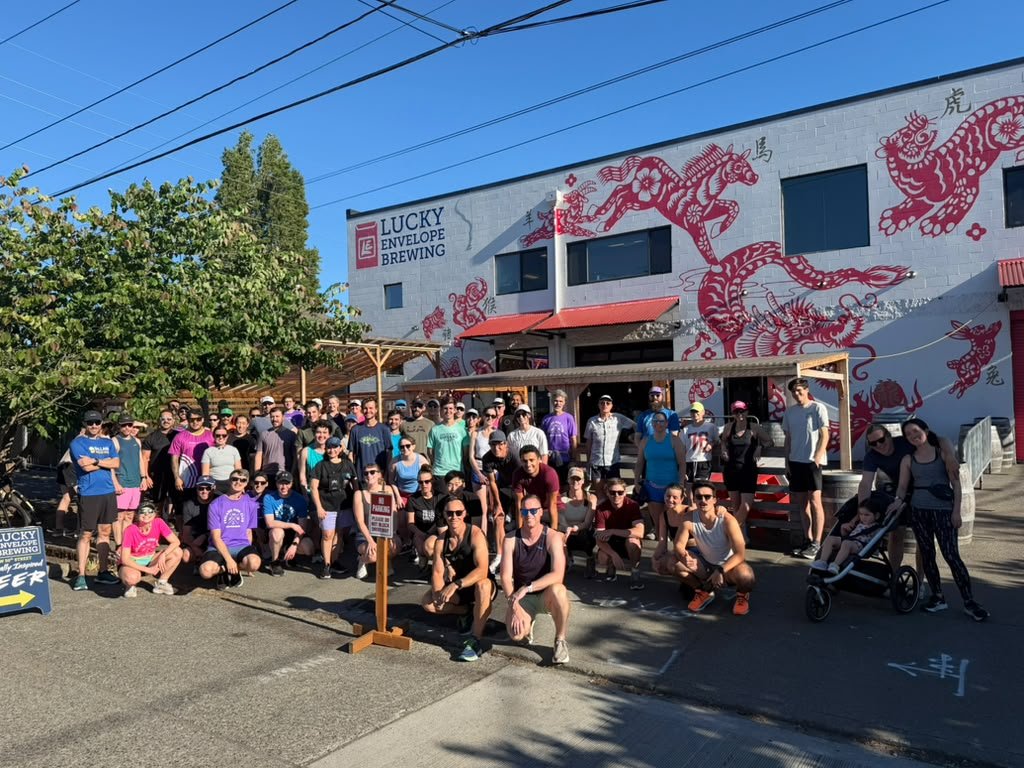
Frelard Run Club
Consistency.
One of the greatest predictors of improvement isn't having the "perfect" training plan—it's training consistently.
Our bodies adapt remarkably well when exposed to gradual, repeated stress. Consistent training improves aerobic capacity, metabolic efficiency, neuromuscular coordination, and the ability of muscles, tendons, bones, and connective tissues to tolerate running loads. These adaptations don't occur after one great workout; they develop over weeks and months of appropriately dosed training.
This is where running partners and clubs can make a difference. It's much harder to hit the snooze button or skip an evening run when someone is expecting you. That built-in accountability helps transform motivation into habit. Even better, the friendships built during long summer runs can be what keeps you lacing up your shoes on those cold, dark Seattle winter days.
A word of caution: Accountability should never override recovery. One of the downsides of group training is feeling obligated to show up when your body is asking for rest. If you're getting sick, feeling unusually fatigued, or noticing lingering aches that aren't improving, forcing a workout may do more harm than good. A trusted training partner can actually be helpful here—they may encourage you to listen to your body instead of pushing through every run. Remember that recovery is a critical component of training, not a sign of weakness.
Bonus: Share your strength training schedule with your running friends… maybe they will join in. Your physical therapist will certainly appreciate the effort.
Your Nervous System Loves Good Company (and also is the driver of recovery).
Running provides tremendous physical benefits, but one of the greatest advantages of running with others has nothing to do with fitness.
Humans are wired for connection. Positive social interactions help regulate our nervous system by providing cues of safety and belonging. Spending time with trusted friends or building community has been shown to reduce stress, decrease anxiety, improve mood, and increase confidence. These psychological benefits also have physiological effects, including lower muscle tension, improved sleep, better recovery, and reduced pain sensitivity.
From a recovery perspective, this matters. When the nervous system perceives the environment as safe, it can shift away from a constant state of vigilance and toward recovery and adaptation. While running itself is a physical stressor, enjoying the experience with supportive people may reduce the overall stress load on the body.
There's also a practical advantage. Many runners train before sunrise or after work when visibility is lower and trails may be quieter. Running with a group often increases both actual and perceived safety, allowing you to relax a little more on your runs.
Learn From Experience—Without Copying Everything.
One of the greatest resources in any running community is the collective experience of its members.
Whether you're training for your first race or tackling a new distance, you'll likely pick up valuable advice about pacing, fueling, hydration, recovery, race strategy, and gear. Conversations during easy miles often become informal coaching sessions, and there's a lot to learn from people who have already navigated the challenges you're about to face.
That said, it's important to remember that running is highly individual. Training history, injury history, biomechanics, recovery capacity, and personal goals all influence what works best for each runner. The shoes your friend loves, the gait cues they swear by, or the nutrition strategy that carried them through a marathon may not be the right fit for you.
Be curious, ask questions, and stay open to new ideas—but don't assume every recommendation applies to your body. The best training plan is one that matches your individual needs and helps you progress sustainably.
Bonus: If you happen to stop by Frelard Run Club, there's a good chance you'll find a physical therapist somewhere in the pack. We're usually happy to chat about running, injuries, strength training, or whatever else comes up between miles.